5 Steps to Understand and Create Flash USDT on ChainIDE
· based on the channel Rca FastPrint
Key takeaways
- Flash USDT is a method involving ERC20 token creation on Ethereum.
- ChainIDE offers an integrated development environment to build and test smart contracts.
- MetaMask is used to connect and interact with Ethereum wallets during Flash USDT creation.
- Smart contract development requires attention to security and verification before use.
- Flash USDT projects are for educational and testing only; avoid sending real funds to unverified contracts.
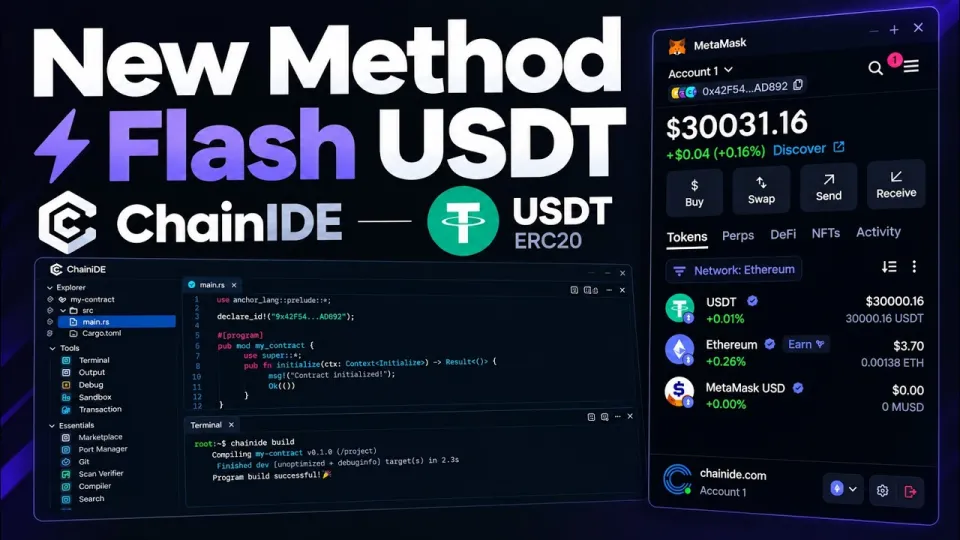
Flash USDT is a method that enables developers and users to create and interact with USDT-like tokens on the Ethereum blockchain using smart contracts. This method is primarily educational and intended for development and testing. The process involves using ChainIDE, an online IDE dedicated to blockchain smart contract development, coupled with MetaMask to manage wallet interactions and transactions.
Understanding Flash USDT and Its Concept
Flash USDT is essentially a demonstration of how to create a USDT-like ERC20 token through smart contract programming. Unlike official Tether tokens, these tokens are created for experimental or educational purposes, showcasing the token creation flow on Ethereum and similar networks. The method showcases the token's structure, deployment, and interaction within a wallet environment.
Setting Up ChainIDE for Flash USDT Development
ChainIDE (https://chainide.com/) is a cloud-based integrated development environment designed for blockchain developers. It allows creating, compiling, and deploying smart contracts in Solidity language without local setup. To create Flash USDT:
- Register or log in to ChainIDE.
- Create a new Solidity project.
- Import or write the ERC20 token contract code tailored to Flash USDT.
- Compile the contract and prepare it for deployment.
This environment streamlines smart contract development and integrates testing features.
Connecting MetaMask for Wallet Interaction
MetaMask is a browser extension wallet that facilitates Ethereum blockchain interactions. To test Flash USDT tokens:
- Install MetaMask and create or import a wallet.
- Connect MetaMask to the Ethereum test network compatible with ChainIDE (e.g., Goerli).
- Use ChainIDE’s deployment interface to deploy the Flash USDT smart contract.
- Confirm deployment transactions via MetaMask.
- After deployment, interact with the token contract functions such as balance checking, transfer, and approval directly through MetaMask or ChainIDE.
This connection allows users to simulate real wallet operations with Flash USDT tokens.
Smart Contract Development Workflow for Flash USDT
Developing Flash USDT tokens involves writing or adapting an ERC20 smart contract. Key components include:
- Token name, symbol (e.g., "FlashUSDT"), and decimals.
- Total supply defined in the constructor.
- Standard ERC20 functions: balanceOf, transfer, approve, allowance, and transferFrom.
- Event logging for transfers and approvals.
The workflow includes coding, compiling, deploying, testing, and verifying the contract on-chain or within ChainIDE’s environment. Proper testing ensures contract functions operate as expected before interacting with wallets.
Common Mistakes and Best Practices
When working with Flash USDT or similar token creation projects, consider these points:
- Never send real funds to unknown or unverified contracts.
- Verify contract addresses and source code carefully.
- Use test networks to avoid financial loss.
- Confirm network compatibility between ChainIDE and MetaMask.
- Review transaction details before signing.
These practices protect users from scams and errors.
Useful Links
- ChainIDE official site for development and registration: https://chainide.com/
- Script and resources for Flash USDT creation: https://sites.google.com/view/defiflashusdt
Conclusion
Flash USDT is a practical example of creating ERC20 tokens using ChainIDE and MetaMask, providing valuable hands-on experience in smart contract development and blockchain interaction. This method highlights the importance of understanding Ethereum token standards and wallet integrations. For anyone interested in experimenting with token creation safely and effectively, following the steps outlined and using the recommended tools is essential. The detailed walkthrough and insights come from the Rca FastPrint channel, which offers comprehensive guides on blockchain development and crypto technologies. For more, visit ChainIDE and begin exploring smart contract development today.
Questions & answers
What is Flash USDT?
Flash USDT is a method of creating USDT-like ERC20 tokens on the Ethereum blockchain primarily for educational and testing purposes, not actual Tether tokens.
How does ChainIDE help in creating Flash USDT tokens?
ChainIDE provides an online integrated development environment where developers can write, compile, deploy, and test smart contracts such as Flash USDT tokens without needing local blockchain setups.
Why is MetaMask necessary when working with Flash USDT?
MetaMask acts as a wallet and gateway to the Ethereum network, allowing users to deploy contracts, sign transactions, and interact with Flash USDT tokens securely within their browser.
Is it safe to send real funds to Flash USDT contracts?
No, Flash USDT contracts are typically for development and testing; sending real funds to unverified contracts risks loss due to potential bugs or scams.
Source: Flash USDT | Found a NEW Method on ChainIDE · Markdown version